Water damage can strike suddenly — from a burst pipe, appliance leak, or severe storm — and the longer moisture lingers, the more severe the damage becomes. Acting quickly is critical to protect your home and prevent mold growth.
Here’s a step-by-step guide on how to dry out your home effectively after water damage.
Before you begin cleanup, ensure the area is safe. Turn off electricity in affected spaces to avoid shock hazards, and wear protective gear such as gloves and boots.
If the water is contaminated from a sewage backup or flood, do not attempt to handle the cleanup alone — contact professionals immediately.

Pre-Cleanup Safety Checklist
- Turn off electricity in affected areas to prevent shocks.
- Shut off the water supply if the leak is ongoing.
- Wear protective gear (rubber boots, gloves, and masks if needed).
- Avoid entering standing water if electrical outlets or appliances are submerged.
- Keep children and pets away from the damaged area.
- If the water is contaminated (sewage, floodwater), call professionals immediately.
Remove Standing Water
The faster standing water is removed, the less water damage your home will suffer. Use a wet/dry vacuum, buckets, or pumps to extract as much water as possible. If flooding is extensive, professional-grade extraction equipment may be necessary to remove deep water from carpets and flooring.
Improve Air Circulation
Once the bulk of the water is gone, focus on airflow.
- Open windows and doors if the weather permits to let in fresh air.
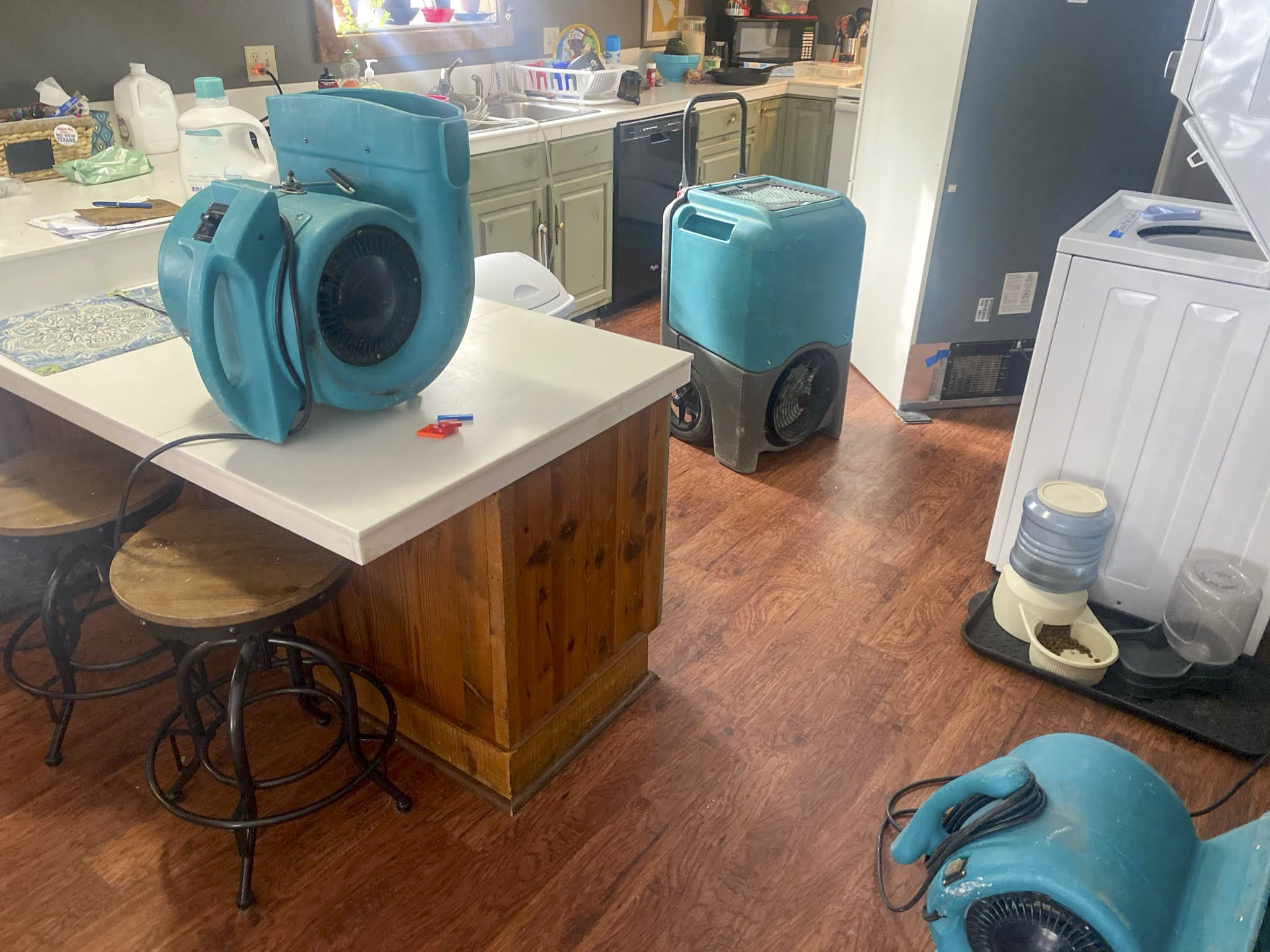
- Use fans to keep air moving throughout affected areas.
- If available, place dehumidifiers in the space to reduce moisture levels quickly.
This step is key to preventing mold from taking hold.Learn more about cleaning up mold after water damage here: How to Clean Up Mold from Water Damage
Remove and Dry Wet Materials
Moisture can linger in materials like drywall, carpet, insulation, and furniture. Remove soaked rugs, upholstered furniture, and other absorbent items to dry separately.
- If drywall is saturated, it may need to be cut away and replaced.
- Hardwood floors and tiles may be salvageable if dried properly with professional equipment.
Disinfect Surfaces
Even after water is removed, bacteria and mold spores may remain.
- Clean and disinfect all affected surfaces with antimicrobial solutions.
- Pay special attention to hidden areas, such as behind baseboards and under flooring, where moisture can become trapped.
Monitor for Mold Growth
Mold can begin developing within 24–48 hours of water damage. Keep an eye out for musty odors, discoloration on walls or ceilings, and fuzzy growth on surfaces.
Pro Tip: If mold is spotted, do not attempt to clean large infestations yourself — professional mold remediation will be required to ensure your home is safe.
Not sure if you need a mold inspection? Read our guide: When Should You Get a Mold Inspection?
Call in Professionals for Severe Damage
While small water spills and leaks may be manageable with DIY methods, extensive water damage often requires expert help. Restoration professionals, like Priority Plumbing and Restoration, use industrial-strength fans, dehumidifiers, and moisture detection tools to ensure every trace of water is removed. This not only saves you time but also prevents costly long-term damage.
Final Thoughts
Drying out your home after water damage is a race against the clock. Acting quickly to remove water, increase airflow, and clean thoroughly can help reduce damage and restore your home faster.
However, for major flooding or hidden moisture, contact Priority Plumbing and Restoration to ensure the job is done safely and effectively!