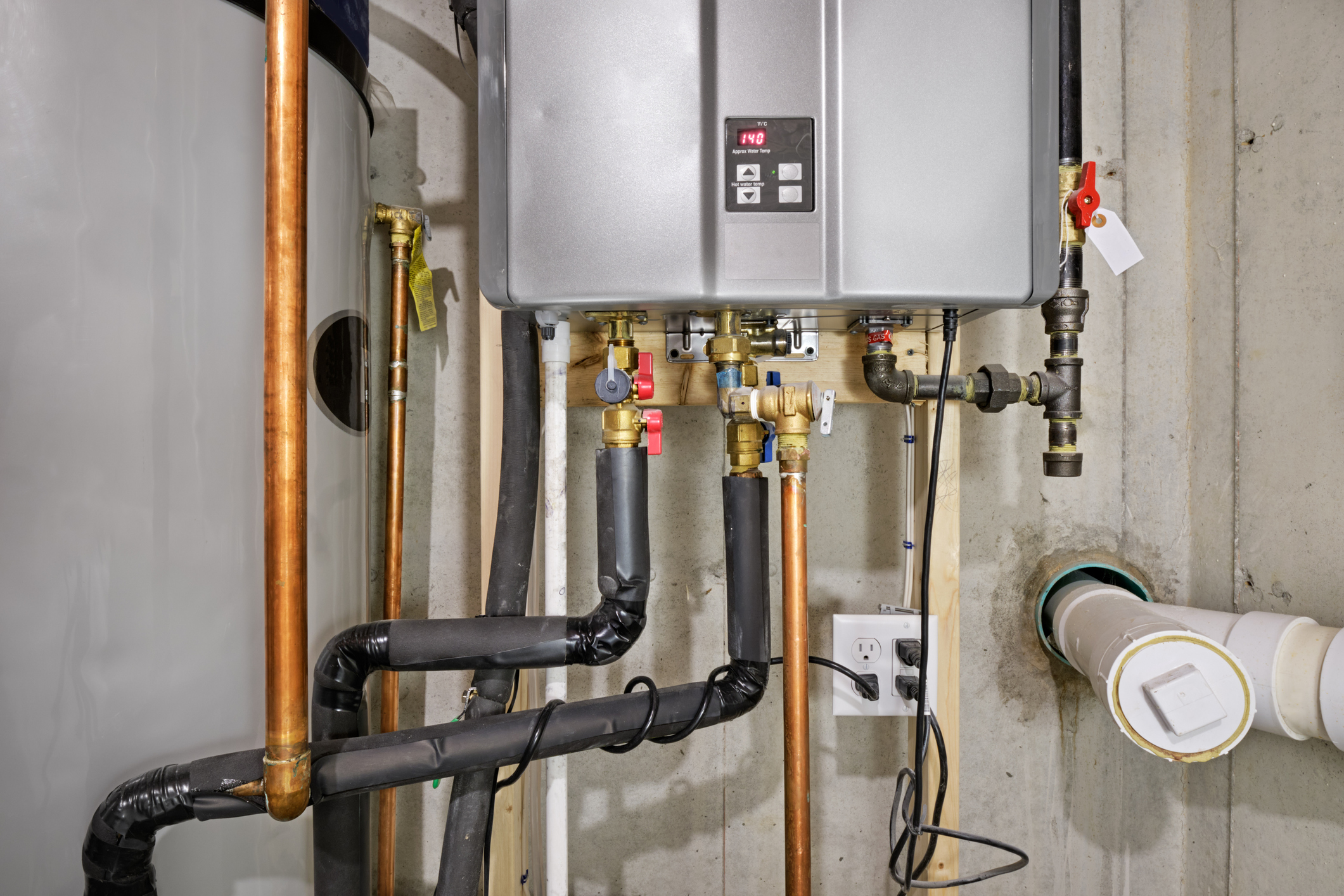
Homeowners today are rethinking traditional water heating. Instead of bulky storage tanks, more households are turning to tankless water heaters, which heat water only when needed. This “on-demand” system eliminates the need to store large volumes of hot water, improving both energy efficiency and space utilization.
According to the U.S. Department of Energy, tankless units can be up to 34% more energy-efficient for homes that use 41 gallons or less of hot water daily. With energy costs continuing to rise, this efficiency translates to real savings over time.
How Tankless Water Heaters Work
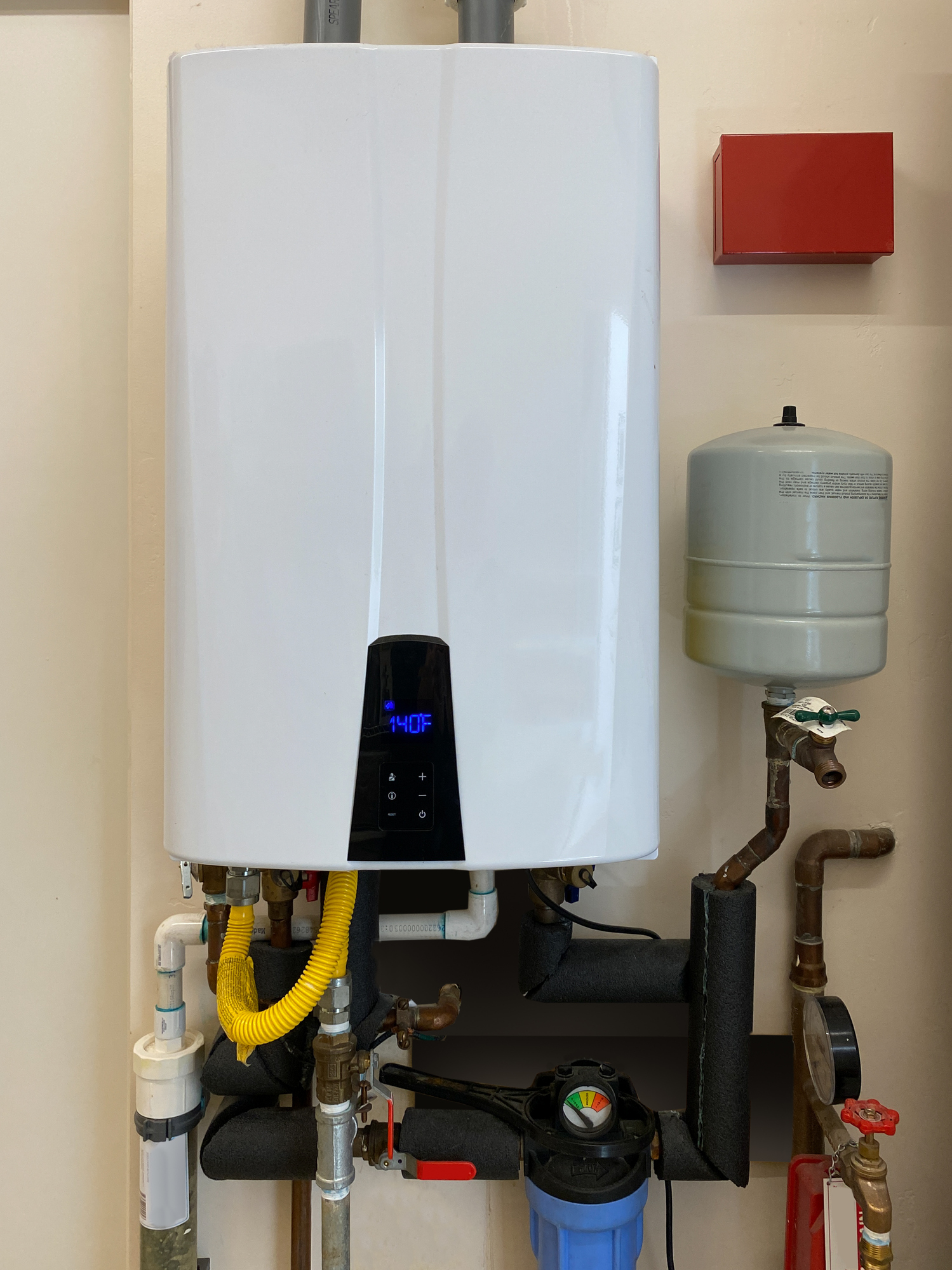
Traditional water heaters continuously heat and store water, using energy even when you’re not running a faucet. In contrast, tankless systems use high-powered burners or electric elements to heat water as it flows through the unit, providing endless hot water whenever you need it.
- This instant heating process also means fewer issues with sediment buildup, which often plagues storage tanks and shortens their lifespan.
Pro Tip: Consider installing a water softener alongside your tankless system if you have hard water. It helps prevent mineral buildup, extending your heater’s life and efficiency.
For more info on hard and soft water, read our guide: The Difference Between Hard and Soft Water (and How It Affects Your Plumbing)
The Benefits of Going Tankless
Four of the biggest benefits offered by tankless water heaters include:
- Energy Savings: Since tankless units don’t continuously heat water, homeowners can cut down on standby energy loss. Over the years, this can significantly reduce utility bills.
- Longer Lifespan: Most tankless heaters last 20 years or more, compared to about 10–15 years for traditional tanks.
- Space Savings: Wall-mounted designs free up valuable square footage in basements or utility rooms.
- Consistent Hot Water: Say goodbye to sudden icy showers after the tank runs out. Tankless systems provide continuous flow.
Pro Tip: For larger households, consider installing multiple smaller units in high-demand areas (like kitchens or master bathrooms) for even distribution and performance.
Not sure when to replace or upgrade your water heater? Learn more here: How Long Do Water Heaters Last? Signs It’s Time for a Replacement
What to Consider Before Making the Switch
While the benefits are clear, tankless systems do have some upfront challenges. The initial cost — including equipment and installation — can be higher than traditional heaters. Additionally, upgrading gas lines or electrical systems may be necessary to support the new unit.
Maintenance is also key. Annual flushing and descaling are recommended to ensure peak performance. Fortunately, these maintenance needs are minimal compared to replacing corroded tanks.
Pro Tip: Always work with a licensed plumber who has experience installing tankless systems. Proper sizing and setup are critical to performance and longevity.
Learn more essential plumbing maintenance tips here: Plumbing Maintenance Checklist Every Homeowner Should Follow
The Bottom Line
For many homeowners, switching to a tankless water heater is a smart investment in energy efficiency, longevity, and convenience. While the upfront cost is higher, the long-term benefits — lower bills, reliable hot water, and reduced environmental impact — make it a worthwhile upgrade.
If you’re considering the switch, Priority Plumbing and Restoration can help assess your home’s needs, recommend the right system, and ensure professional installation for lasting performance. Contact us today!